

Global Vet & Co
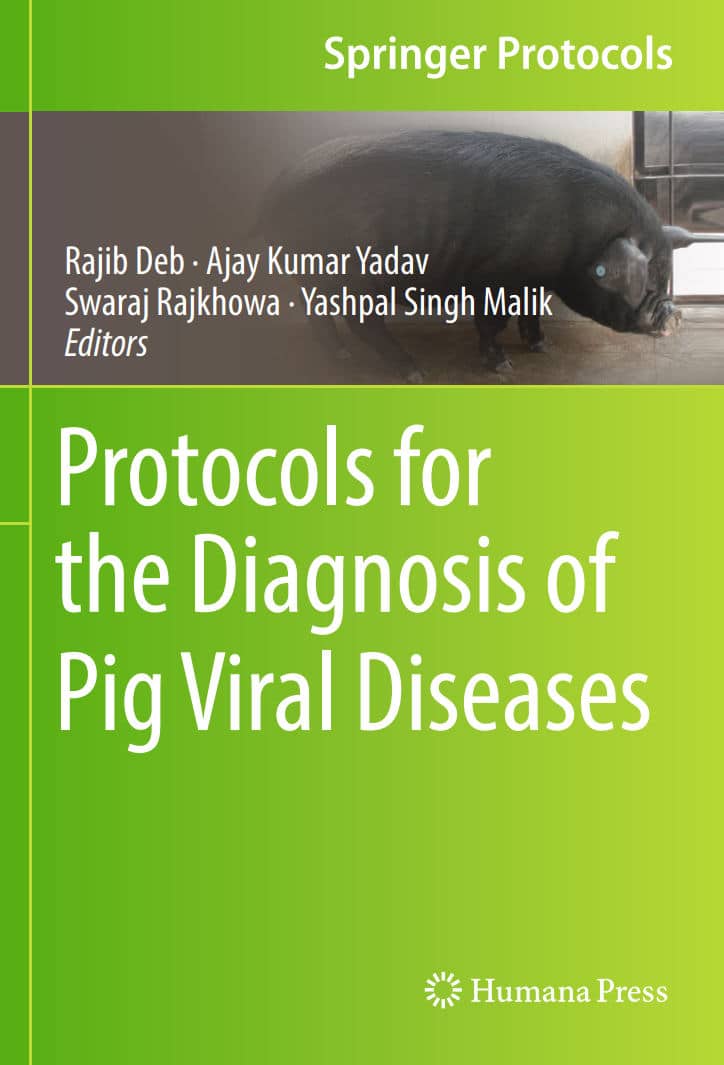
Protocols For The Diagnosis Of Pig Viral Diseases
Protocols For The Diagnosis Of Pig Viral Diseases
常规价格
HK$279.00
常规价格
促销价
HK$279.00
结账时计算的运费。
数量
无法加载取货服务可用情况
Master Protocols For The Diagnosis Of Pig Viral Diseases with this comprehensive guide. Essential reading for veterinary students, practitioners, and technicians seeking to deepen their expertise in Animals Books > Farm Animals > Protocols for the Diagnosis of Pig Viral Diseases. Includes clinical case studies and practical applications. Instant digital download.
Table of Contents
Sample Preview
The full PDF is available after purchase. Instant download. Lifetime access. Read on any device.
- Preface (p.6)
- Contents (p.7)
- Contributors (p.12)
- 1 Introduction (p.16)
- 2 Infectious Disease Outbreak and Its Spread (p.22)
- 3 Epidemiological ``Know-How´´: An Important Pillar for Development of Surveillance System and Outbreak Preparedness (p.22)
- 4 Investigation of Viral Disease Outbreak in Swine (p.23)
- 5 Outbreak Investigation Steps for Infectious Diseases (p.27)
- 6 Implementation of Viral Disease Control Program at Various Levels (p.30)
- 7 Prevention and Control Measures for the Viral Disease Outbreaks in Swine Population (p.31)
- 8 Conclusion (p.32)
- References (p.33)
- 1 Background (p.36)
- 2 Introduction (p.37)
- 3 Suitable Criteria for Collection and Transport and Preservation of Samples (p.38)
- 4 Collection and Transport and Preservation of Samples (p.42)
- 5 Conclusion (p.44)
- References (p.44)
- 1 Introduction (p.46)
- 2 Infectivity Assays (p.47)
- 3 Calculation of End-Point Titer (p.51)
- 4 Haemadsorption Assay-Based Infectivity Assay for African Swine Fever Virus (ASFV) (p.54)
- 5 Chemical/Physical Methods of Virus Quantitation (p.54)
- 6 Applications of Virus Quantification (p.58)
- 7 Conclusion (p.59)
- References (p.60)
- 1 Introduction (p.63)
- 2 Important Considerations for Purification of the RNA from Clinical Specimen (p.65)
- 3 Lysis Buffer (p.66)
- 4 Density Gradient Centrifugation (p.69)
- 5 Silica Technology (p.72)
- 6 Affinity Matrices (p.75)
- 7 Purification Using Magnetic Beads (p.75)
- 8 Separation of Double-Stranded RNA from Single-Stranded RNA (p.76)
- 9 Filter Paper Matrix Cards (p.78)
- 10 Storage of Purified RNA (p.78)
- References (p.79)
- 1 Introduction (p.81)
- 2 Principle of Multiplex PCR (p.82)
- 3 Optimization of a Multiplex PCR (p.86)
- 4 Multiplex PCR Troubleshooting (p.93)
- 5 Key Pointers for Multiplex PCR Development (p.95)
- 6 Evaluation as a Potential Diagnostic Tool (p.95)
- 7 Advantages of Multiplex PCR (p.99)
- 8 Application of Multiplex PCR in Porcine Diseases (p.99)
- 9 Conclusion (p.102)
- References (p.102)
- 1 Introduction (p.105)
- 2 Materials (p.107)
- 3 Methods of Plasmid Isolation (p.109)
- 4 Notes (p.119)
- References (p.120)
- 1 Introduction (p.122)
- 2 Materials (p.129)
- 3 Methods (p.129)
- 1 Introduction (p.140)
- 2 RNA-PAGE Principle (p.141)
- 3 Sample Preparation: RNA Extraction from Clinical or Biological Samples (p.142)
- 4 Procedure: From Setting Up PAGE Apparatus to Stained Gels Visualization (p.143)
- 5 Method (p.143)
- References (p.149)
- 1 Introduction (p.150)
- 2 Peptide Nucleic Acid (PNA) (p.151)
- 3 Materials and Methods (p.151)
- References (p.161)
- 1 Introduction (p.163)
- 2 Loop-Mediated Isothermal Amplification (LAMP) (p.165)
- 3 Nucleic Acid Sequence-Based Amplification (NASBA) (p.165)
- 4 Clustered Regularly Interspaced Short Palindromic Repeats (CRISPR) (p.166)
- References (p.168)
- 1 Introduction (p.170)
- 2 Selection of Aptamers (p.171)
- 3 Application of Aptamer in Detection of Viral Diseases (p.172)
- 4 Nucleic Acid Aptamers (p.173)
- 5 Peptide Aptamers (p.175)
- 6 Peptide Nucleic Acid Aptamers (p.175)
- 7 Advantages of Aptamers (p.176)
- 8 Future Prospects (p.177)
- References (p.178)
- 1 Introduction (p.181)
- 2 General Structure of an Antibody: An Overview (p.183)
- 3 Biosensor/Immunosensor (p.186)
- 4 Antibody Immobilization (p.188)
- 5 Biosensor Types (p.191)
- 6 Biosensor Fabrication (p.197)
- 7 Methods for Biosensor Fabrication and Analyte Detection (p.199)
- References (p.201)
- 1 Introduction (p.204)
- 2 LFA Design and Principle (p.206)
- 3 Materials (p.208)
- 4 Methods (p.208)
- 5 Notes (p.211)
- References (p.212)
- 1 Introduction (p.214)
- 2 ddPCR Experimental Workflow (p.216)
- 3 Notes (p.218)
- 4 ddPCR for Porcine Viruses (p.220)
- 5 Conclusion (p.221)
- References (p.221)
- 1 Introduction (p.223)
- 2 Materials (p.226)
- 3 Method (p.226)
- 4 Notes (p.232)
- 5 Conclusion (p.236)
- References (p.236)
- 1 Introduction (p.238)
- 2 Materials Required for PSR (p.240)
- 3 Methods (p.241)
- 4 Notes (p.244)
- References (p.244)
- 1 Introduction (p.246)
- 2 RPA Mechanism (p.248)
- 3 RPA Operating Parameters (p.248)
- 4 Detection of Amplicons (p.252)
- 5 RPAs for Porcine Viruses (p.254)
- 6 Conclusion (p.255)
- References (p.255)
- 1 Introduction (p.258)
- 2 Types of Cell Culture System (p.259)
- 3 Cell Culture System for Porcine DNA Viruses (p.260)
- 4 Cell Culture System for Porcine RNA Viruses (p.262)
- References (p.267)
- 1 Monoclonal Antibody (mAb) (p.271)
- 2 How Hybridomas Are Produced? (p.272)
- 3 Characterization of mAb (p.277)
- 4 Application of mAbs in Diagnosis (p.277)
- 5 Conclusion (p.278)
- References (p.279)
- 1 Introduction (p.281)
- 2 Sample Collection (p.282)
- 3 Sample Preparation (p.283)
- 4 Probes (p.284)
- 5 Optimizing Conditions for Hybridization (p.286)
- 6 Nucleic Acid Hybridization Protocol (p.288)
- 7 Advantages and Limitations of Nucleic Acid Hybridization Methods (p.291)
- 8 Applications of Nucleic Acid Hybridization in Viral Disease Diagnosis (p.292)
- 9 Conclusion (p.293)
- References (p.293)
- 1 Introduction (p.296)
- 2 Principles of LDR (p.297)
- 3 Principles of LDR-Fluorescent Microsphere Assay (LDR-FMA) (p.298)
- 4 Materials (p.299)
- 5 Methods (p.299)
- References (p.300)
- 1 Introduction (p.302)
- 2 Materials (p.308)
- 3 Methods (p.311)
- 4 Notes (p.314)
- References (p.315)
- 1 Introduction (p.318)
- 2 Sample Preparation (p.319)
- 3 Electrophoresis (p.320)
- 4 SDS-PAGE (p.320)
- 5 Native PAGE (p.321)
- 6 Protocol for SDS-PAGE (p.322)
- 7 Protocol for Western Blot (p.327)
- 8 Applications of PAGE and Western Blotting in Virology (p.328)
- 9 Limitations of Western Blot (p.329)
- 10 Troubleshooting (p.330)
- 11 Conclusion (p.332)
- References (p.332)
- 1 Introduction (p.334)
- 2 Viral Diseases of Pigs and Their Public Health Importance (p.336)
- 3 Diagnostic Methods for Viral Diseases: Needs and Challenges (p.337)
- 4 Recent Methods in the Diagnosis of Viral Infections (p.341)
- 5 Immune Assays in Swine Viral Diseases (p.344)
- 6 Immunoassays and Immunochemistry (p.345)
- 7 Swine Viral Diseases and Major Diagnostics Immunoassays (p.346)
- 8 Conclusion (p.352)
- References (p.353)
- 1 Introduction (p.355)
- 2 Materials (p.357)
- 3 Methods (p.357)
- 4 Notes (p.363)
- References (p.364)
- 1 Introduction (p.366)
- 2 History of Lab-Escaped Pathogens (p.367)
- 3 Good Laboratory Practices (p.369)
- 4 Biosafety Requirements While Working with Infectious Agents (p.370)
- 5 Risk Groups, Biosafety Levels, and Physical Containment Levels (p.373)
- 6 Working Safely in a Virology Laboratory (p.374)
- 7 Conclusion (p.378)
- References (p.378)
- Index (p.381)
- ... and 1 more chapters
Preview This Book (First 20 Pages)
Scroll through the preview above to see the first 20 pages of this book.
🔗 Download Link:
Frequently bought together


Frequently Bought Together
-
Minivet Guide
常规价格 HK$279.00常规价格 -
Equitation Science 2Nd Edition
常规价格 HK$210.00常规价格 -
How To Become A Veterinary Assistant
常规价格 HK$210.00常规价格 -
How To Align Your Veterinary Practices Goals With Latest Trends
常规价格 HK$210.00常规价格 -
How To Achieve Successful Veterinary Practice
常规价格 HK$210.00常规价格 -
How Social Media Can Level Up Your Veterinary Practice
常规价格 HK$210.00常规价格






Recently Added
-
Ducks Production And Management
常规价格 HK$210.00常规价格 -
Veterinary Forensics Medicine And Forensics Sciences
常规价格 HK$210.00常规价格 -
Illustrated Textbooks Of Clinical Diagnosis In Farm Animal
常规价格 HK$340.00常规价格 -
Ecotoxicology Of Marines Organisms
常规价格 HK$210.00常规价格


